
The Ship Graveyard: Exploring the Wrecks of Abu Nuhas
In the northern reaches of the Egyptian Red Sea, near the busy shipping lanes of the Straits of Gubal, lies a submerged reef that has become the stuff of maritime legend. Its name is Sha’ab Abu Nuhas.
Translated from Arabic as the “Reef of Copper,” Abu Nuhas is a triangular patch of coral that barely breaks the surface. For centuries, it has sat directly in the path of ships navigating the narrow passage toward the Suez Canal. The result is a vertical cemetery of steel and wood—a ship graveyard where at least four world-class wrecks lie within a few hundred meters of one another.
For a scuba diver, Abu Nuhas is a playground. Because the wrecks sit at various depths within recreational limits (roughly 5 to 32 meters), it is possible to explore multiple chapters of maritime history in a single day. From a 19th-century steamship to modern cargo freighters, these are the stories of the four iconic wrecks of Abu Nuhas.
 1. The Giannis D: The Architect’s Wreck
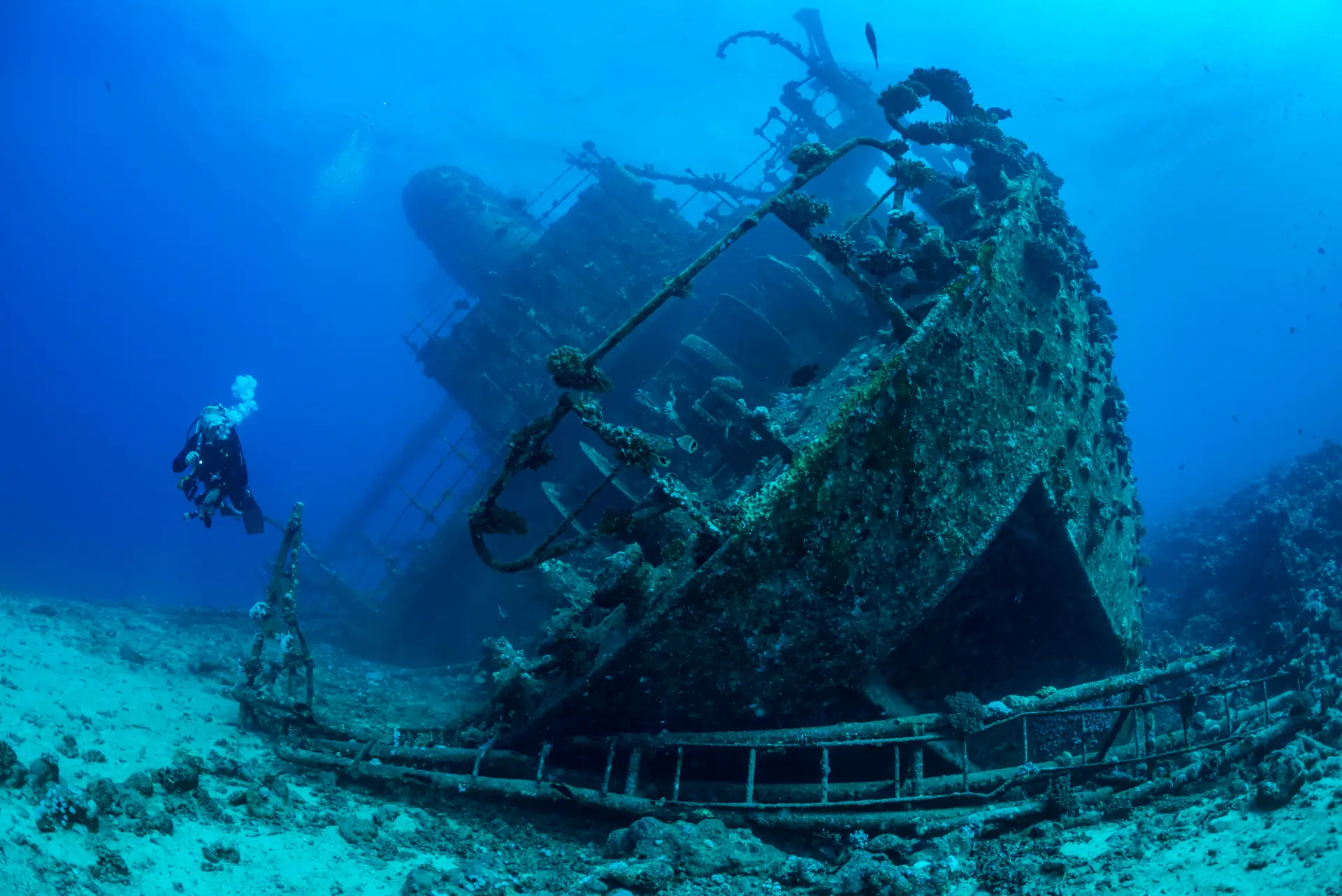
If there is a “headline” act at Abu Nuhas, it is the Giannis D. Sunk in April 1983, this 99-meter Greek cargo ship was carrying a full load of softwood timber from Croatia to Saudi Arabia when it slammed into the reef at full speed.
The ship eventually split into three sections. While the bow and midships are fascinating, it is the stern that makes this one of the most famous wreck dives in the world. The stern section lies at a 45-degree angle, resting on its port side at about 24 meters deep.
The Experience: Diving the Giannis D is a surreal experience. Because of the tilt, entering the massive engine room or the bridge can be incredibly disorienting—your brain expects the floor to be flat, but the world is sideways. Sunlight streams through the skylights, illuminating a labyrinth of steel pipes, ladders, and valves. Outside, the wreck is a magnet for marine life. The “A-frame” mast reaches toward the surface, encrusted in soft corals and surrounded by swirling clouds of glassfish and hunting trevally.
 2. The Carnatic: The Grand Old Lady (The “Wine Wreck”)
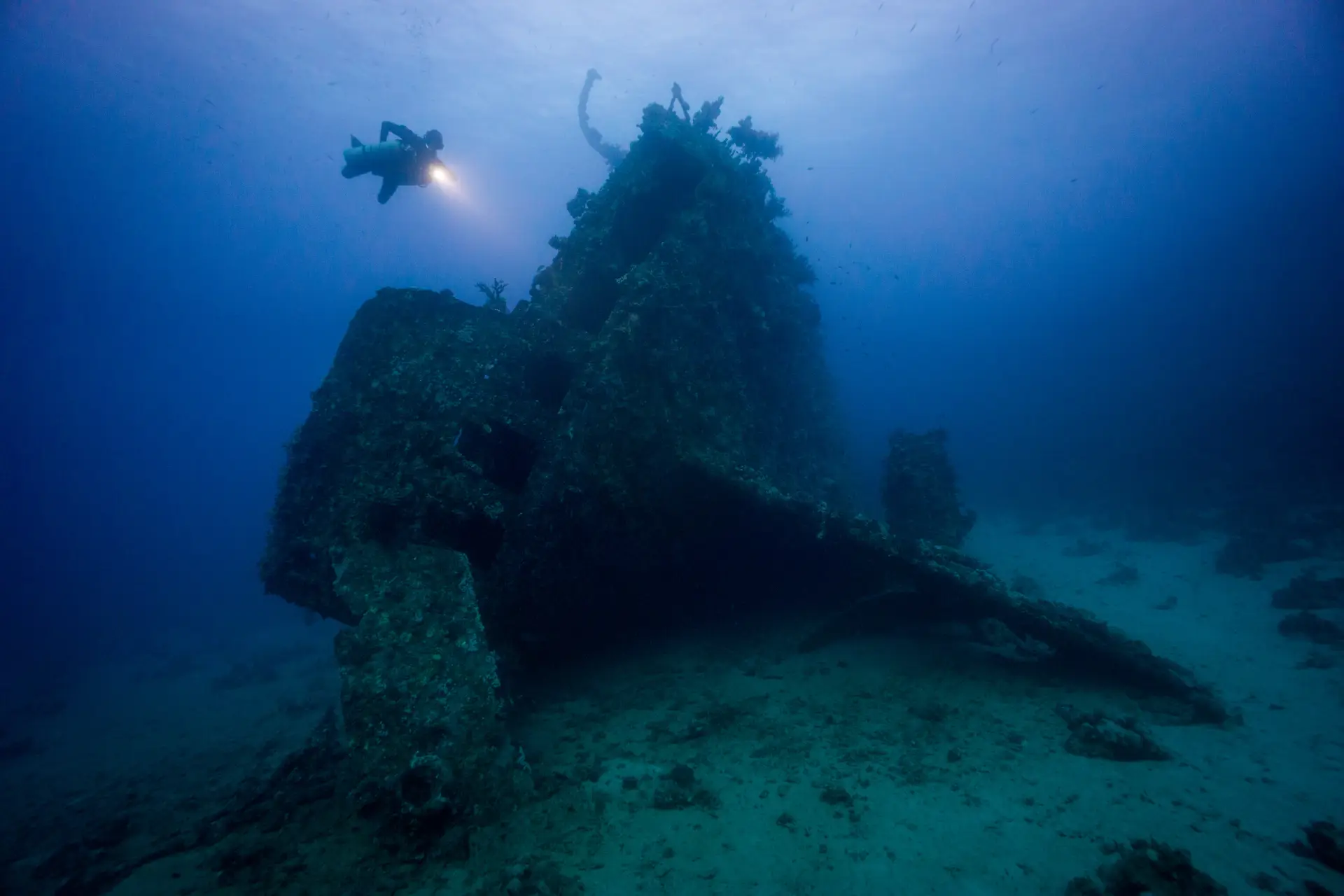
Lying just east of the Giannis D is the oldest and perhaps most beautiful resident of the reef: the SS Carnatic. Launched in 1862, she was a British P&O mail and passenger steamer that represented the peak of naval architecture in her day—a hybrid of sail and steam power.
In September 1869, just months before the Suez Canal opened, the Carnatic struck the reef. Legend has it the crew and passengers spent two days on the reef waiting for help before the ship finally snapped in two and sank, taking with it a cargo of cotton, mail, fine wine, and £40,000 in gold.
The Experience: After over 150 years underwater, the Carnatic has been largely reclaimed by the ocean. The wooden decks have long since rotted away, leaving behind a skeletal iron “cage” that is breathtakingly photogenic. The wreck is famous for its soft coral coverage; purple and orange sea fans cover every inch of the remaining ribs. In the holds, you can still find the broken remains of the original wine and soda water bottles that gave the wreck its nickname.
 3. The Chrisoula K: The Tile Wreck
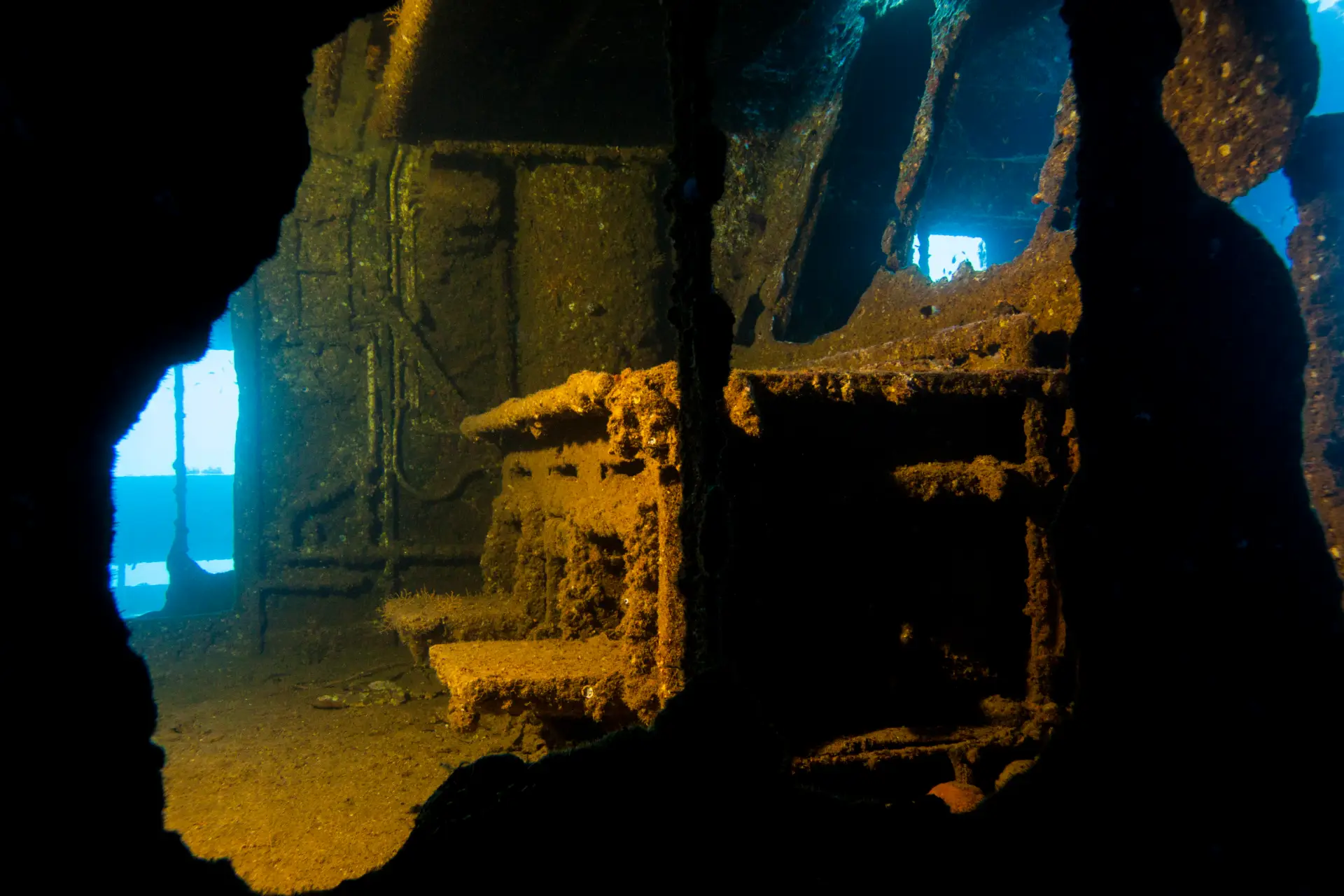
Sunk in August 1981, the Chrisoula K is often confused with a nearby wreck called the Marcus, but its cargo tells its true story. This 98-meter freighter was carrying a massive shipment of Italian floor tiles destined for Jeddah when it met its end.
The ship sits in an upright position, but the stern has tilted and partially collapsed. The bow is remarkably shallow, sitting in just 3 to 5 meters of water, making it a great spot for safety stops or even snorkeling.
The Experience: The draw of the Chrisoula K is the “cargo of tiles.” You can swim through the holds and see thousands of tiles still neatly stacked in their crates, a frozen moment in 1980s logistics. The engine room is another highlight—it’s large, accessible, and filled with interesting machinery, though like the Giannis D, the slight tilt can make your internal gyroscope feel a bit off.
4. The Kimon M: The Lentil Wreck
The final member of the “Big Four” is the Kimon M, which sank in December 1978. Carrying 4,500 tons of bagged lentils, this 121-meter freighter hit the reef at the far eastern end.
For many years, the Kimon M was the “forgotten” wreck of Abu Nuhas because it sits slightly further away from the main mooring area. However, recent storms have caused parts of the wreck to collapse, revealing the massive engine and creating new swim-throughs for divers.
The Experience: The Kimon M is often dived last, and its isolation means you often have the wreck entirely to yourself. The highlights here are the massive propeller and rudder, which sit at about 27 meters. Because it is less crowded, the marine life here is often more “wild”—it’s a great spot to see large groupers, schooling snappers, and the occasional resident turtle tucked into the wreckage.
Diving Conditions at Abu Nuhas
Abu Nuhas is located about three hours north of Hurghada, making it accessible for both day boats and liveaboards. However, its location on the edge of the Straits of Gubal means it is exposed to the elements.
-
Currents: The current can be strong and usually runs from north to south. Most dives are planned as “moored” dives or short drifts depending on the sea state.
-
Visibility: Generally excellent, often exceeding 20–30 meters.
-
Sea State: Because the wrecks are on the windward side of the reef, the surface can be choppy. If the wind is too strong (over 20 knots), it can be difficult or dangerous for boats to moor here.
Wreck Diving Safety & Respect
Exploring these wrecks is a privilege. When diving in Egypt and exploring these historical sites, remember:
-
Don’t Touch: The metal is fragile and often sharp. Touching not only damages the history but can also harm the delicate corals that have grown over the steel.
-
Watch Your Bubbles: When penetrating holds or engine rooms, try to exhale in areas where your bubbles won’t get trapped against the “ceiling,” as the air can accelerate corrosion.
-
Perfect Your Buoyancy: Wreck diving is all about precision. One careless kick can stir up silt, ruining the visibility for others or causing you to strike a rusted bulkhead.
-
No Souvenirs: It is strictly illegal to remove anything from these wrecks. The beauty of Abu Nuhas lies in the fact that the cargo—be it tiles, timber, or lentils—is still there for the next generation to see.
Conclusion: A Masterclass in Wreck Diving
There are very few places in the world where you can dive four unique shipwrecks spanning over a century of history in a single day. Abu Nuhas is more than just a graveyard; it is an underwater museum and a thriving artificial reef system.
Whether you are mesmerized by the skeletal beauty of the Carnatic or the disorienting halls of the Giannis D, the “Father of Copper” offers a dive experience that is as haunting as it is beautiful.