
Clownfish Around the World: A Global Look at One of the Ocean’s Most Iconic Fish
Few marine animals are as instantly recognizable as the clownfish. With their bold orange bodies, crisp white bands, and constant darting movements among anemone tentacles, clownfish have become symbols of coral reef life itself. While many people associate them with tropical snorkeling or popular culture, clownfish are far more complex—and far more widespread—than most realize.
From the shallow reefs of the Red Sea to the coral gardens of the Pacific and Indian Oceans, clownfish occupy a unique niche in reef ecosystems worldwide. This article explores where clownfish are found, how different species vary by region, and why these small fish play such an outsized role in coral reef environments.
What Exactly Is a Clownfish?
Clownfish belong to the subfamily Amphiprioninae, which includes around 30 recognized species. They are closely related to damselfish and share many traits such as territorial behavior and strong site attachment.
Most clownfish species grow between 7 and 15 centimeters (3–6 inches) and are known for their bright coloration, typically orange, yellow, red, or black with white vertical bands. While appearance varies by species and location, their defining characteristic is their symbiotic relationship with sea anemones.
The Famous Clownfish–Anemone Partnership
Clownfish are among the very few fish species that can live safely among the venomous tentacles of sea anemones. Through a special mucus coating on their skin, they are protected from the anemone’s stinging cells.
This partnership benefits both animals:
-
Clownfish gain protection from predators that avoid the anemone
-
Anemones benefit from increased water circulation, cleaning, and nutrients from fish waste
-
Clownfish may also chase away anemone-eating species
This symbiosis is so strong that many clownfish rarely stray far from their host anemone, sometimes spending their entire lives within a few square meters of reef.
 Where Clownfish Are Found Around the World
Clownfish are native exclusively to the warm waters of the Indo-Pacific region. They do not occur naturally in the Atlantic or Caribbean. Within their range, however, they occupy a vast geographic area spanning thousands of miles.
The Red Sea
The Red Sea is home to several clownfish species, including the Red Sea anemonefish (Amphiprion bicinctus), which is found nowhere else in the world. This species typically displays a deep orange body with two white bars and often inhabits shallow reef flats and lagoon areas. They are frequently seen by divers who are scuba diving in Hurghada, Dahab, or Sharm el Sheik.
Red Sea clownfish tend to be highly territorial and are often seen aggressively defending their anemones against much larger fish—or even divers who venture too close.
The Indian Ocean
Across the Indian Ocean, clownfish are commonly found around:
-
The Maldives
-
Sri Lanka
-
The Andaman Sea
-
East Africa
-
Indonesia
Species such as the Clark’s anemonefish (Amphiprion clarkii) and saddleback clownfish (Amphiprion polymnus) are widespread in this region. Indian Ocean clownfish often display more variation in color, ranging from bright yellow to almost black, depending on location and habitat.
 Southeast Asia and Indonesia
Indonesia is one of the world’s most diverse regions for clownfish species. Warm waters, extensive reef systems, and abundant anemones create ideal conditions for multiple species to coexist.
Divers here may encounter:
-
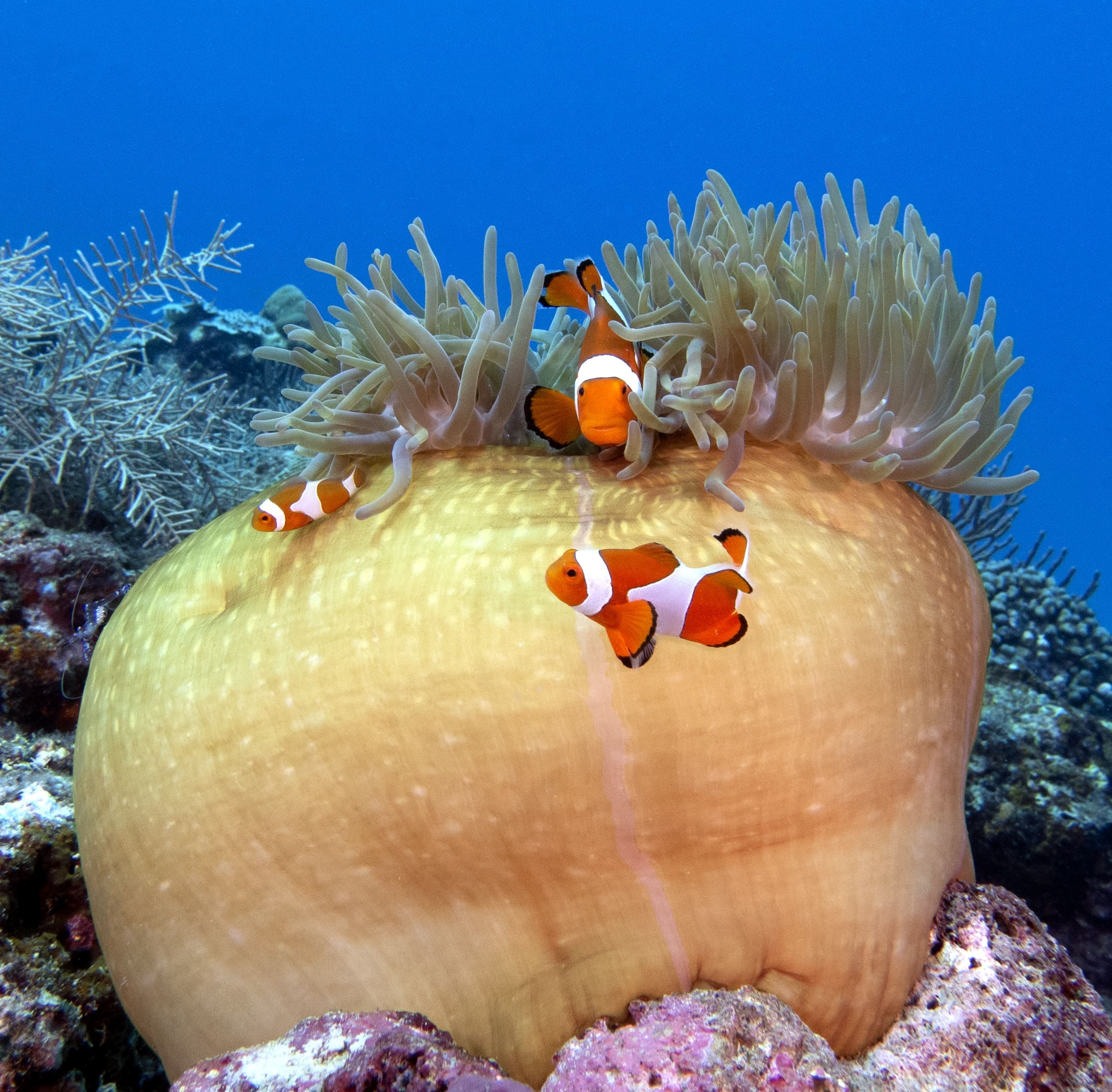
False clownfish (Amphiprion ocellaris)
-
Percula clownfish (Amphiprion percula)
-
Skunk clownfish (Amphiprion akallopisos)
-
Tomato clownfish (Amphiprion frenatus)
Some Indonesian regions host up to seven or more clownfish species within relatively small geographic areas.
The Great Barrier Reef and Australia
Australia’s reefs, including the Great Barrier Reef, are home to some of the most studied clownfish populations in the world. Species commonly seen include:
-
Percula clownfish
-
Clark’s anemonefish
-
Cinnamon clownfish
Long-term research in Australia has provided much of what scientists know about clownfish social structure, breeding behavior, and environmental resilience.
Micronesia and the Western Pacific
In regions such as Palau, Papua New Guinea, the Solomon Islands, and Micronesia, clownfish thrive in shallow reef systems with abundant anemone species.
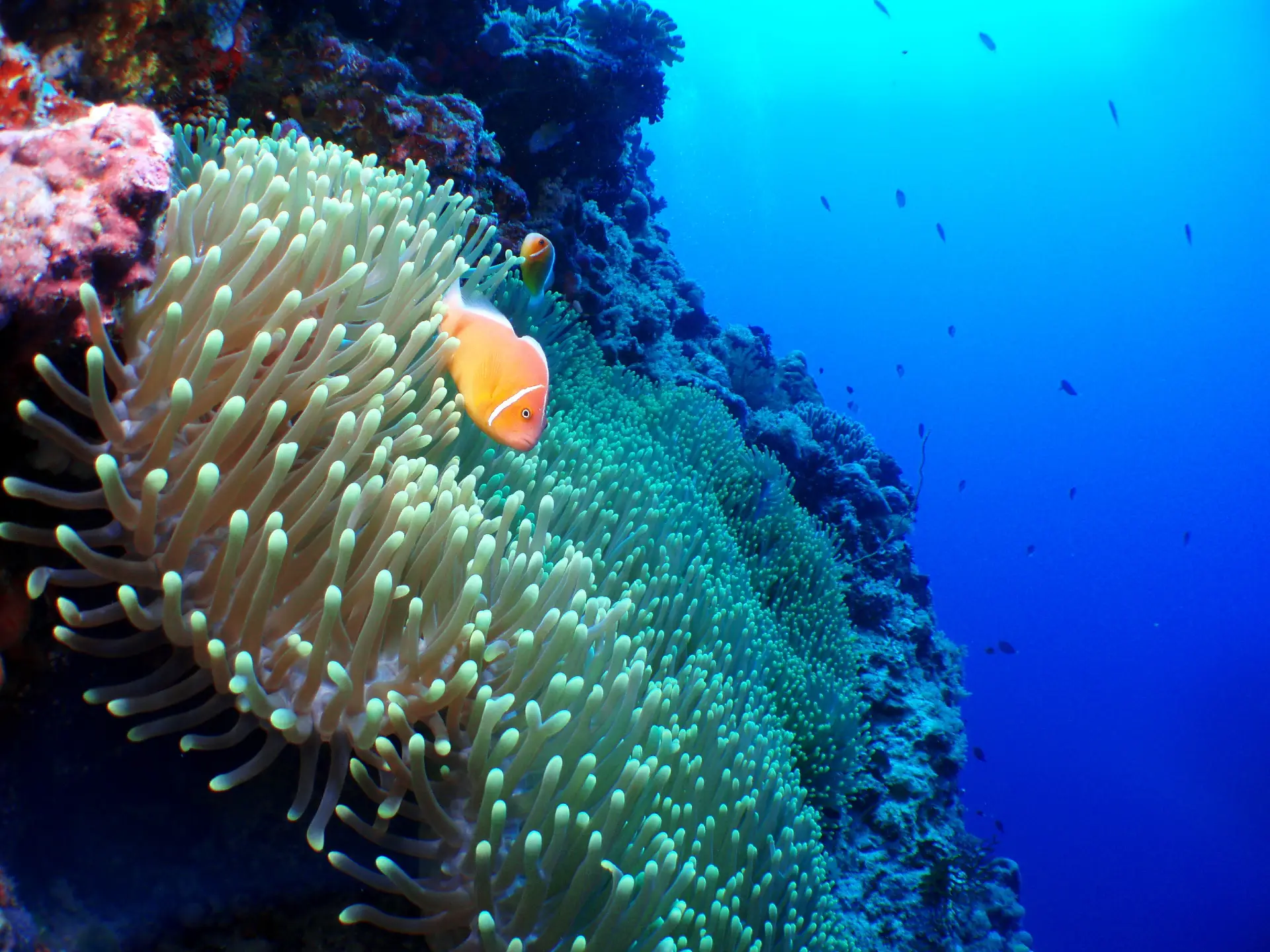
The pink skunk clownfish, three-band anemonefish, and spine-cheek anemonefish are commonly encountered here, often displaying region-specific coloration and size differences.
Clownfish Social Structure: Life Inside the Anemone
Clownfish live in strict social hierarchies. Each anemone hosts a small group consisting of:
-
One dominant female (the largest fish)
-
One breeding male (second-largest)
-
Several non-breeding juveniles
If the female dies, the breeding male changes sex and becomes female, and the largest juvenile moves up the hierarchy. This ability, known as sequential hermaphroditism, is one of the most fascinating aspects of clownfish biology.
Breeding and Parenting Behavior
Clownfish are devoted parents. The breeding pair lays eggs on a flat surface near the base of their anemone. The male guards the eggs aggressively, fanning them with his fins to provide oxygen and removing debris or damaged eggs.
After about 6–10 days, the larvae hatch and drift into the open ocean before eventually settling onto a reef and seeking an anemone host of their own.
Color Variation and Regional Differences
One of the reasons clownfish remain so popular with divers and photographers is the incredible variation between species—and even within the same species across different regions.
Examples include:
-
Nearly black clownfish found in parts of Indonesia
-
Bright yellow variants in the Indian Ocean
-
Thick-banded or thin-banded patterns depending on habitat
-
Differences in fin shape and body size
These variations reflect both genetic differences and environmental adaptation.
Threats Facing Clownfish Worldwide
Despite their popularity, clownfish face several global threats:
Habitat Loss
Coral reef degradation and anemone loss directly impact clownfish survival.
Climate Change
Rising sea temperatures and coral bleaching reduce available habitat and disrupt breeding cycles.
Aquarium Trade
While many clownfish are now captive-bred, wild collection still occurs in some regions, placing pressure on local populations.
Anemone Decline
Without healthy anemones, clownfish cannot survive long-term.
Why Clownfish Matter to Reef Ecosystems
Clownfish play an important role beyond their visual appeal:
-
They help keep anemones clean
-
They contribute nutrients that benefit coral growth
-
They influence reef fish behavior through territorial defense
-
They serve as indicators of reef health
Healthy clownfish populations often reflect healthy reef systems.
Why Divers Love Clownfish
Clownfish are popular among divers for several reasons:
-
Easy to find in shallow water
-
Highly photogenic
-
Active and expressive behavior
-
Strong site attachment makes observation easy
For beginner divers, clownfish often become one of the first “personality fish” they learn to recognize, sparking deeper interest in marine life.
Final Thoughts
Clownfish may be small, but their global presence, complex behavior, and ecological importance make them one of the most fascinating reef fish in the ocean. From the Red Sea to the far reaches of the Pacific, these colorful fish continue to capture the imagination of divers, scientists, and ocean lovers alike.
Understanding where clownfish live, how they interact with their environment, and the challenges they face helps deepen our appreciation for coral reefs as interconnected ecosystems. Whether you encounter a single anemonefish guarding its home or a bustling anemone colony filled with activity, clownfish offer a vivid reminder that some of the ocean’s most remarkable stories are told on the smallest scales.